User research summary
Interviews with potential users focused on multi-platform communication and app roles. A literature review covered communication in information-dense environments; a competitor audit examined project management tools, social media platforms, and AI email tools. These insights refined assumptions about merging work and personal communication, informing shallow IA and contextual actions.
Personas & user stories
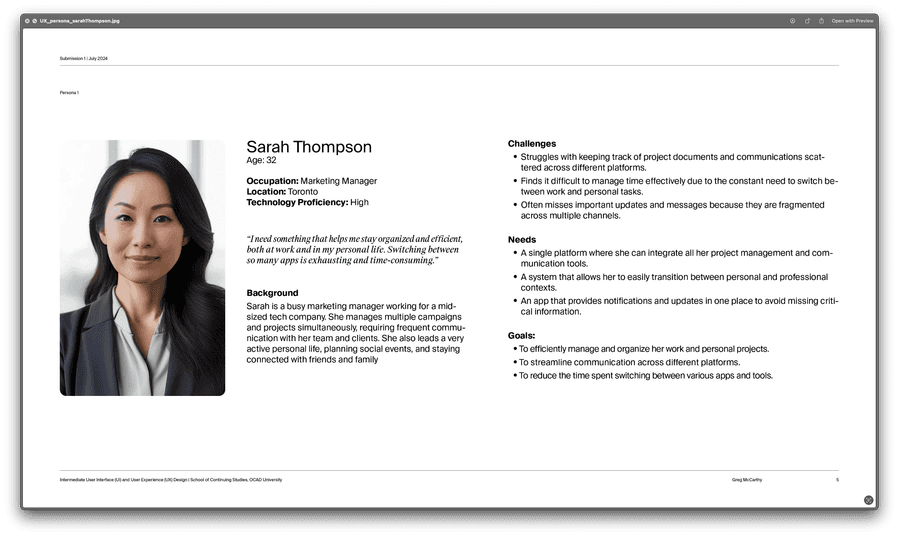
After reviewing the interview transcripts and coding the data, I built out personas that informed the project going forward. This process also involved understanding edge cases and developing user stories. The personas acted like a North Star — at each stage, it was important to ask if the choices made were beneficial to these potential user groups.
A persona for Sarah Thompson, one of two developed. The personas acted like a North Star in the project; at each stage, it was important to ask if the choices made were beneficial to these potential user groups.
Key pain points
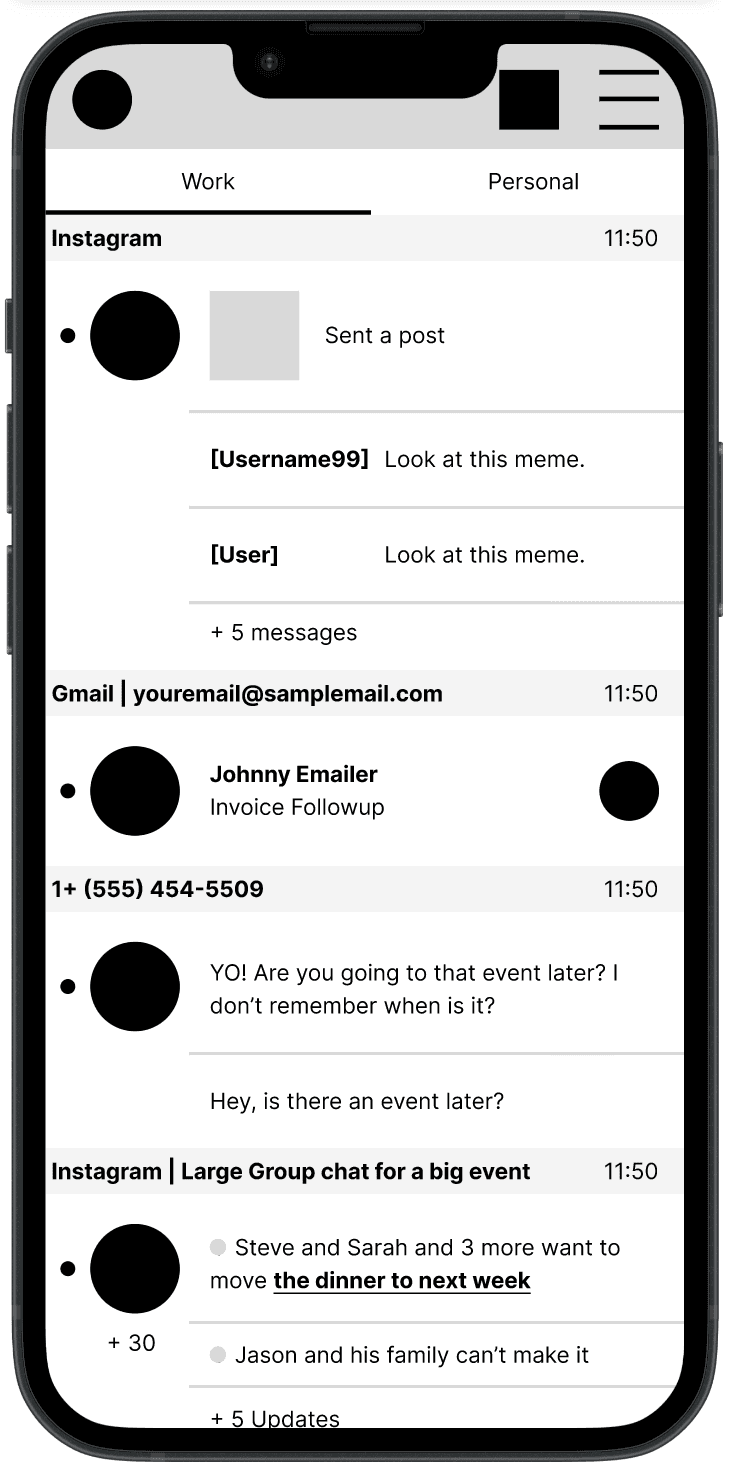
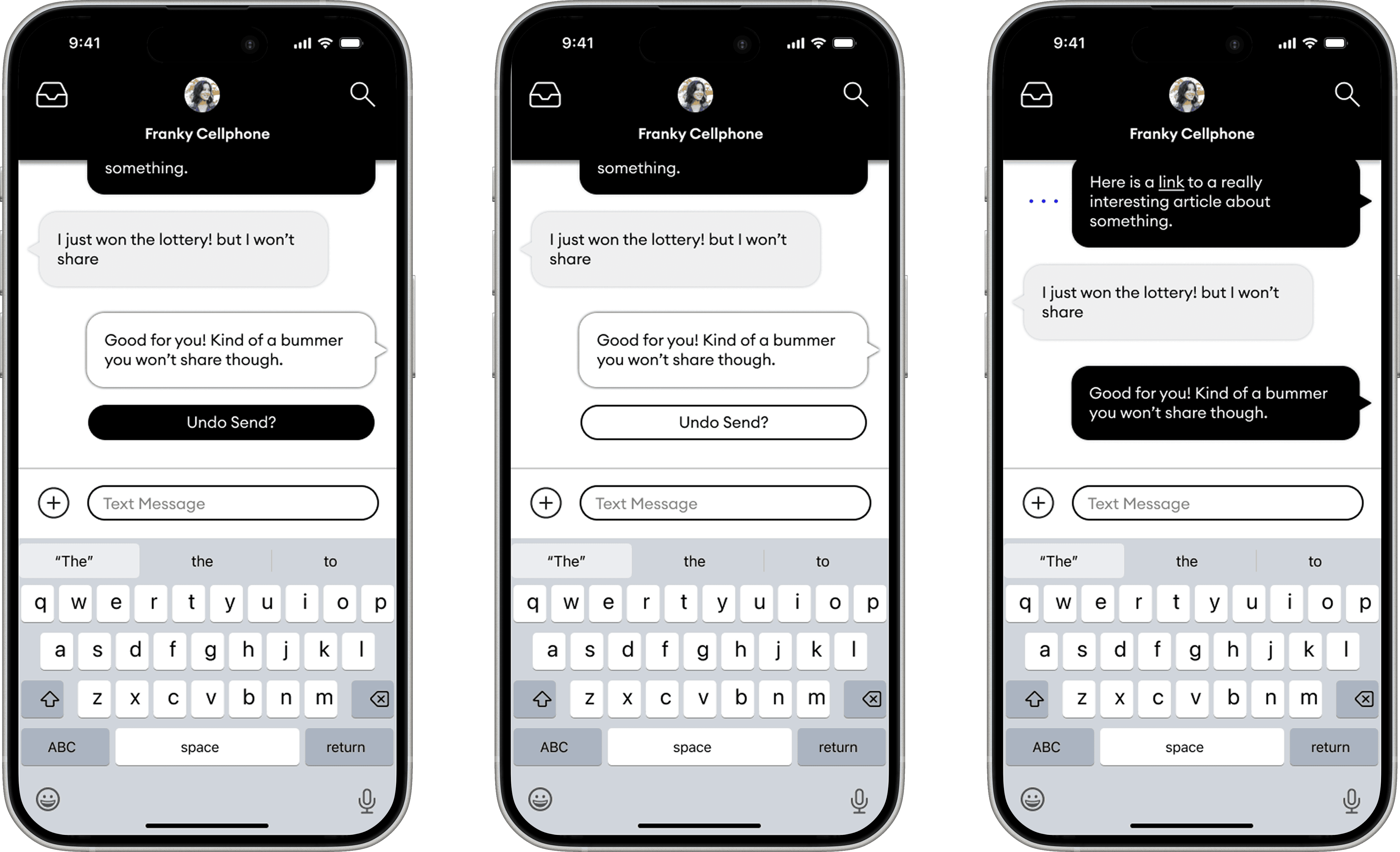
To streamline the experience, the design enabled inbox-level, contextual actions and AI retrieval, addressing user frustration with time lost hunting for older messages across various applications. Prioritisation cues were incorporated to surface critical information first, solving the problem of important messages getting buried by notification noise. Finally, the scope was refocused on personal communications to prevent the unwanted blending of work and personal channels.
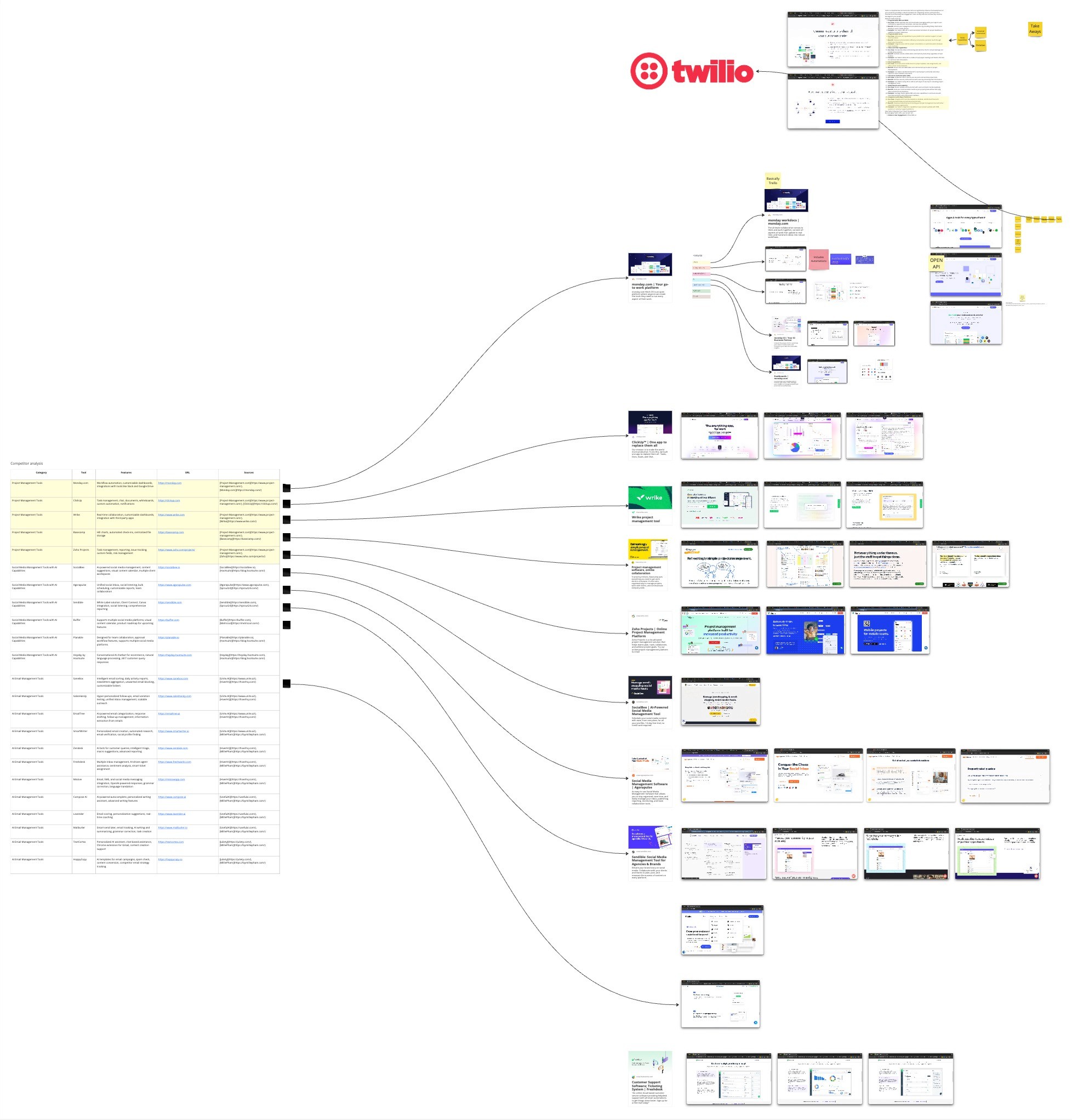
A screenshot of preliminary competitor research being done in Miro that was later expanded to include feature offerings and other relevant information.
Competitor & literature insights
An audit of competitors (project management, social media, AI email) and a literature review on communication in information-dense environments — particularly how medical professionals manage patient data — revealed three key insights:
- Prioritise situational awareness — UI should minimise extraneous information and use goal/task-oriented language.
- Important actions in the inbox — information architecture should be shallow, and contextual menus should assist users.
- Reminders improve response rates — follow-up prompts likely increase response rates.
These insights guided the development of user flows that quickly routed users to necessary replies.